
Inside Killarney National Park: Every Lake, Wood and Landmark
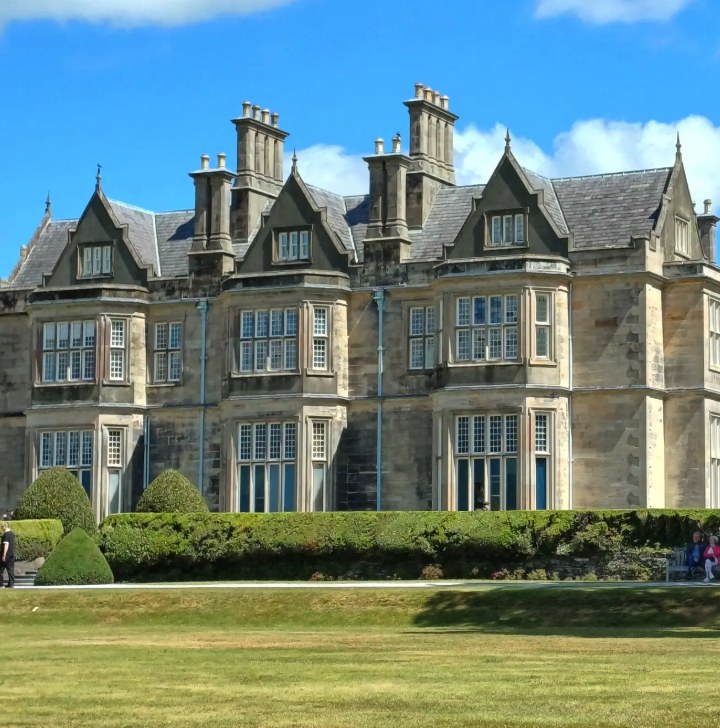
The park is four old estates that grew together
It helps to stop thinking of Killarney National Park as one place. It is a run of former private demesnes — designed landscapes of woods, drives and planting — that came into public ownership at different times and now share a boundary. That is why the paths go where they do and why the oaks stand in rows in some places and nowhere near rows in others.
Knockreer sits against the town. Ross Island juts into Lough Leane. Muckross is the big central estate. Beyond them the ground climbs into Torc, Mangerton and the Reeks. Each section below is one of them.
Knockreer — the part you can walk to
Through the gates beside Killarney House on Muckross Road, five minutes from the town centre. Knockreer is open parkland rather than woodland, and the view across it to the MacGillycuddy’s Reeks is the photograph most people take home.
The Knockreer Circular runs five kilometres over it. Knockreer House, the last of the Kenmare mansions, is now the park’s education centre and is not open to visitors, but the grounds around it are. This is where the red deer graze in the early morning.
Ross Island — the castle, the copper and the boats
Two and a half kilometres south of town at the end of Ross Road. The fifteenth-century tower house stands over Lough Leane with Innisfallen Island offshore, and its interior can be seen on a guided tour: €5, fifteen people at a time, 5 March to 3 November.
Behind it the island carries the Mining Trail, three kilometres past old copper workings, plus the Library Point and Governor’s Rock walks. The jetty here is the only departure point for boats onto the lake.
Muckross — the estate everything else orbits
Six kilometres south on the N71, with the biggest free car park in the park. The Victorian mansion is open all year at €9, the gardens behind it are free, and the Traditional Farms next door recreate 1930s Kerry farming from mid-March to October.
Within twenty minutes’ walk of the same car park you also have Muckross Abbey, the lakeshore, Mossy Woods and Arthur Young’s Walk. If you only stop once in Killarney National Park, stop here.
Muckross Abbey — roofless since 1652
A ten-minute walk from that car park, free, ungated and open whenever you arrive. The Observantine Franciscans founded it in 1448 with the backing of the Gaelic chieftain Donal Mac Mór Mac Chartaigh. It was sacked in the Desmond Rebellions and in 1652 Cromwell’s forces took the roof off to make it uninhabitable.
The yew filling the cloister is the thing people remember — possibly 400 years old, and described in 1756 as spreading over the cloister niches like a great umbrella.
Reenadinna — the yew wood most visitors walk past
On the limestone of the Muckross peninsula stands 25 hectares of yew woodland, the largest in Western Europe, with trees of 200 to 250 years. It is a Special Area of Conservation and it grows here because yew tolerates thin lime soil that beats almost everything else.
Under the canopy the ground is nearly bare and the light is unlike anywhere else in the park. It is a short detour from the main Muckross paths and it is quiet even in August. More on why in the flora and fauna guide.
Torc — the waterfall and the road behind it
Signposted off the N71 past Muckross, with its own small car park. The made path reaches the foot of the falls in five minutes, which is where most visitors stop and where most visitors are right to stop.
Above the falls, steps climb to a viewpoint and join the Old Kenmare Road, which runs seven kilometres out into open bog and mountain. That is the best walk in the park on a clear day and the one that needs boots.
Ladies’ View and the Upper Lake
Nineteen kilometres south on the N71, a roadside viewpoint with a car park and a cafe, looking back down over the Upper Lake and the whole valley. It is the best panorama here that costs no walking at all.
Every Ring of Kerry coach passes it and most stop for around twenty minutes. From here the geology of the place is legible in one glance — the ice-cut hollow, the sandstone ridges, the limestone country opening out toward Killarney. The landscape page unpacks that.
The Gap of Dunloe
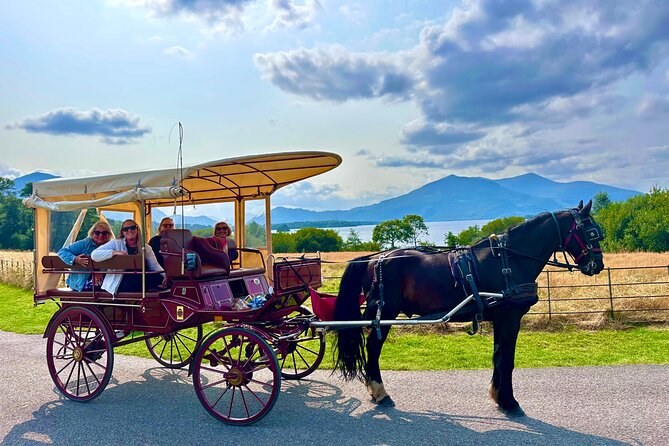
A glacial breach on the western edge, between the Purple Mountain group and the Reeks. Free to walk or cycle, single track, and shared with jaunting cars all summer. The classic day runs up through the Gap and back by boat through the three lakes to Ross Castle.
It is the one part of this list not to attempt by car in high season.
Where each part is, at a glance
| Section | Distance from town | Free? | What it is for |
|---|---|---|---|
| Knockreer | Walk, 5 minutes | Yes | Parkland, the Reeks view, early deer |
| Ross Island | 2.5 km | Island yes, castle €5 | The keep, copper trails, boats |
| Muckross | 6 km | Grounds yes, house €9 | House, gardens, farms, lakeshore |
| Muckross Abbey | 6 km, then a walk | Yes | The 1448 friary and its yew |
| Reenadinna yew wood | 6 km, then a walk | Yes | 25 ha of yew, quiet in August |
| Torc Waterfall | 8 km | Yes | The five-minute waterfall walk |
| Ladies’ View | 19 km | Yes | The panorama over the Upper Lake |
| Gap of Dunloe | 12 km west | Yes | The glacial pass and the boat route |
How to see several of them in one go
The distances defeat most people. Knockreer to Muckross is six kilometres of road walking; Muckross to Ross Castle is a twenty-minute drive. There is no shuttle between them.
The carriage roads that link the Knockreer and Lough Leane sections are closed to cars but open to jaunting cars, which is why an hour on one covers ground a morning on foot would not. Which entrance serves which section is on the map and boundary page, and hours and prices are on the visiting page.
Tours that fit this trip
Departures that stop at the landmarks above — the friary, the lakeshore and Torc.
Pick the section you want and the tour that reaches it on Killarney National Park Tours, or start with how to visit in 2026 for hours, prices and parking.